
Should I bulk or cut? For a beginner the honest answer is neither, because a body new to training can do both at once. For a trained lifter the question has four honest answers, and only one of them is yes: cut if there is muscle worth revealing, build first if there is not, maintain first if you have just come out of a hard phase, and do neither if your life or your relationship with the mirror cannot carry it right now.
This guide covers where the bulk then cut rule came from, why it does not apply to a first year, the four honest answers Shawn Ray puts in front of a trained lifter before a cut, the rough check for whether there is enough muscle to reveal, and what to do in the weeks between one phase and the next. The sources are Start Strong, chapter twelve, and The Cut Protocol, chapter two.
In short
Bulk or cut is a competitor's question. A beginner does not have to choose: eat a little less, the same, or a little more depending on the body you start with, train three days a week, and fat goes down while muscle goes up. A trained lifter asks the mirror four questions before a cut. Is there muscle worth revealing? Has the body recovered from the last hard phase? Can life carry twelve to sixteen weeks of discipline? Can the mirror be trusted? Yes to all four means cut. Any other answer means build, maintain, or wait.
Where Bulk or Cut Came From
The question did not come from nowhere. It comes from competitive bodybuilding, and for an experienced competitor it makes sense. Shawn Ray lived it for years, and his description of a contest run is specific: twelve weeks to do the business, four to come up and get strong, four to change the diet and start leaning out, and the last four to burn off the fat and get right for the stage. A body that already carries a lot of muscle and very little fat cannot easily do both jobs at once, so the work is split into phases.
The trouble starts when that model gets handed to people it was never built for. It is one of the most common questions beginners ask online, and Start Strong says plainly that it paralyzes people for months. Should I lose the weight first and then start lifting? Should I build first and worry about the fat later? What if I pick the wrong one? The answer depends entirely on which body is asking.
If You Are New to Training, You Do Not Have to Choose
Start Strong's twelfth chapter is built around this one piece of good news. A body that has never trained has a small, hungry muscle room with its doors open, and plenty of stored fat to draw on. Eat a little less than the body needs, keep protein at one to two palms per meal, train three days a week, and the protein goes to building new muscle while the energy shortfall is paid from fat. The audiobook calls it body recomposition, and the research it cites found it happens most easily in people new to training, people coming back after a long break, and people carrying extra body fat. It gets harder as a lifter gets leaner and more experienced, which is exactly why competitors eventually switch to phases. For a first year, that is a problem for years from now.
So instead of bulk or cut, Start Strong gives three paths by starting point. Carrying a lot of extra fat: eat a little less, drop the sugary drinks, protein high, aim for half a percent to one percent of bodyweight a week. Somewhere in the middle, the body most people call skinny fat: eat about what you eat now but cleaner, train hard, and expect the scale to stand still while the body changes under it. Thin and struggling to gain: add a little food, an extra cupped hand of carbs, a handful of nuts, a glass of milk, and gain ten pounds at a time. The full picture, with the warehouse the audiobook uses to explain it, is in how to lose fat and gain muscle at the same time. Whether the third path's struggle to gain is genetics or effort, and why nobody is a non responder, is the subject of are you a hard gainer.
If You Are Trained, Ask the Mirror Four Questions
For a lifter with real training behind them the question is live, and The Cut Protocol opens with the honest look in the mirror before anything changes. Not the mirror you check halfway through a cut to see if it is working. The one you check before you commit. Shawn Ray gives four honest answers, and he is direct that about half the people who pick up the audiobook wanting the answer to be yes should be hearing a different one.
Yes. A meaningful training base, at least eighteen months of serious work. Visible muscle that a structured cut will reveal. Training that is consistent, four to six days a week, with progressive overload you can document. Nutrition reasonably dialed in even off a cut. Sleep in good shape, seven to eight hours most nights. A life stable enough for twelve to sixteen weeks of focused discipline. A specific destination: a deadline, a stage, a number or a photo. If that is you, the cut is yours to run.
Not yet, build first. The cut reveals what you have built. If you have not built much, the cut does not have much to reveal, and a lifter six months in who runs a twelve week cut arrives at the end smaller and softer, a thinner version of the same person. In Shawn Ray's words in The Cut Protocol, the cut is not how you build the body, the cut is how you finish the body. The build comes first, months and years of consistent heavy training and eating to support it.
Not yet, maintain first. A body that just came out of a hard phase, a hard cut, a hard cycle, a pregnancy, a major stressor, is depleted. The hormones are suppressed and recovery is compromised, and a cut on top of that is the fastest way to lose the muscle you just spent months building. Four to eight weeks at maintenance calories first, until sleep, training quality, hunger and mood are back to baseline.
No, not right now. If life is in chaos, a cut will not fix it. Job stress that keeps you up at night, a relationship falling apart, a family member who needs you, a move, a new baby, a medical issue not yet addressed. A cut needs discipline, focus and recovery, and none of them are available in survival mode. Stabilize the life first. Cut later.
Cut or Bulk First: The Rough Check for Enough Muscle
There is no perfect number, and The Cut Protocol does not pretend there is. The rough check has two parts. First the calendar: serious training with progressive overload on the big lifts, proper recovery and nutrition, for at least eighteen months to two years, probably means a base worth revealing. Less than that, or years in the gym without ever really pushing, probably does not. Then the mirror, flexed, with one honest question: if twenty pounds of fat came off this body, would the muscle underneath look impressive to me? If the answer is no, the answer to whether you should cut right now is also no. Build first, and come back in twelve to eighteen months. The audiobook sends that lifter to the Maximum Growth Blueprint, the training book in the catalog for the lifter who needs to build first.
That is the whole answer to cut or bulk first for a trained lifter. Not a body fat percentage, not a rule about which season it is, but an honest reading of what the cut would have to reveal. Shawn Ray has said it for years, and repeats it in The Cut Protocol: every lifter has different limitations based on height, weight, years of experience and knowledge of nutrition and recovery, and the assessment in front of the mirror is what decides whether a protocol works or wastes the next twelve weeks.
Between the Phases: What Happens After a Cut
The second honest answer, maintain first, is also the answer to the question that follows every cut: should you bulk straight after it? Not immediately. Four to eight weeks at maintenance is the bridge, and the weeks after a show or a hard diet have their own trap, where appetite comes back harder than the plan does. How that rebound works, and why reverse dieting exists, is covered in reverse dieting and the post show rebound. How a single holiday dinner fits inside either phase without undoing it is in how to recover from a cheat day.
The Answer Nobody Wants to Hear, and Why It Is in the Audiobook
The Cut Protocol has a fourth no, and Shawn Ray asks some readers to listen to it most carefully. If you have a history of disordered eating, an obsessive relationship with the scale, or body dysmorphia where the mirror tells you a different story than your training partners do, a structured cut is not safe in its current form. The mirror is the central instrument of a cut: it tells you when it is working, when to adjust and when to stop, and if the mirror has been telling lies for years, a cut makes those lies louder. The audiobook's instruction is to talk to a qualified mental health professional and a registered dietitian who specialize in eating disorder recovery before considering any structured cut. Your health is worth more than any physique. Anything is.
What This Article Did Not Cover
This article covered the decision. It did not cover:
- How the cut itself is run, the rate of loss, the week six stall and the levers, which is The Cut Protocol
- How to eat on each of the three beginner paths, portion by portion, which is how to lose fat and gain muscle at the same time
- How a building phase is structured for a trained lifter, which is the Maximum Growth Blueprint
- Body fat percentages as a threshold for cutting. Neither source uses one, and this article does not invent one
- Contest preparation and peak week, which is Shawn Ray on Competing
Where to Go Deeper
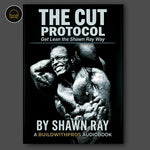
The Cut Protocol · Audiobook
Ten chapters by Shawn Ray on a cut with a start date and an end date: the honest assessment this article draws on, the goal, the rate that keeps the muscle, the week six stall and what to pull first, when to stop a cut early, cutting for a stage, and holding the result afterwards. A recorded introduction plays on the product page before you buy. Narrated audiobook, not by Shawn Ray, 1 hour 38 minutes. Instant access after checkout, delivered as one full MP3 plus chapters in ZIP.
Start Strong · Audiobook
Nineteen chapters by Shawn Ray for a first year with weights: the plan and the notebook, the first week, how muscle grows, the three day program, the food, and the chapter on losing fat and building muscle at the same time that this article draws on. A recorded introduction plays on the product page before you buy. Narrated audiobook, not by Shawn Ray, 5 hours 13 minutes. Instant access after checkout, delivered as one full MP3 plus chapters in ZIP.
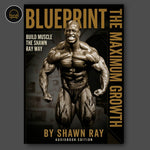
For the lifter the mirror sends back to building, the Maximum Growth Blueprint is the training audiobook for that phase. The full catalog runs in order through the Five Tracks on the Shop by Goal page.
Frequently asked questions about bulking and cutting
Should I bulk or cut first as a beginner?
Neither, as a rule. A body new to training can lose fat and build muscle in the same twelve weeks, so Start Strong replaces the choice with three eating paths: eat a little less if you carry extra fat, eat about the same but cleaner if you sit in the middle, and eat a little more if you are thin and struggling to gain. Bulking and cutting is a model for lifters who already carry a lot of muscle.
How do I know if I have enough muscle to cut?
The Cut Protocol gives a rough check rather than a number. Eighteen months to two years of serious training with progressive overload, proper recovery and nutrition usually means there is a base worth revealing. Then the mirror test: flexed, would the muscle underneath look impressive to you if twenty pounds of fat came off? If the honest answer is no, build first.
Should I bulk or cut if I am not fat but not lean either?
For a beginner, neither. That body is path two in Start Strong: eat about what you eat now, protein at every meal, mostly real food, and train hard. The scale may barely move while fat goes out and muscle comes in. For a trained lifter the same mirror test applies: if there is not much muscle to reveal, the answer is build first, not cut.
How long should I stay at maintenance between a cut and a bulk?
Four to eight weeks, and not straight into the next phase. The Cut Protocol's second honest answer is not yet, maintain first: four to eight weeks at maintenance calories to get sleep, training quality, hunger and mood back to baseline before the next hard phase. What happens in the weeks after a cut, and why the appetite rebound is the dangerous part, is covered in the article on reverse dieting after a show.
Is it ever the wrong time for either a bulk or a cut?
Yes. The Cut Protocol's third answer is no, not right now: job stress that keeps you up at night, a relationship falling apart, a family member who needs you, a move, a new baby, a medical issue not yet addressed. A hard phase needs discipline, focus and recovery, and none of them are available in survival mode. Stabilize the life first.
Who should not run a cut at all?
Anyone with a history of disordered eating, an obsessive relationship with the scale, or body dysmorphia. The mirror is the central instrument of a cut, and if the mirror has been telling lies for years, a structured cut makes those lies louder. The Cut Protocol asks those readers to talk to a qualified mental health professional and a registered dietitian who specialize in eating disorder recovery before considering any structured cut.
About the source
This article is published by BuildWithPros and draws on Start Strong, chapter twelve, and The Cut Protocol, chapter two, from the BuildWithPros catalog. The research referred to is the research the audiobooks cite, and where they give no figure, this article gives none. The competitive experience behind the catalog is that of IFBB Hall of Famer Shawn Ray: 13-time Mr. Olympia competitor with 12 consecutive top-five finishes from 1990 to 2001, Mr. Olympia runner-up in 1994 and 1996, and 1991 Arnold Classic champion, across a career spanning nearly two decades. It follows the standard applied across the catalog: every method explained, nothing left to guesswork.
Educational content only, not medical or nutritional advice.
This article is published by BuildWithPros for general educational and informational purposes. It is not medical, nutritional or training advice for the individual and not a substitute for care from a qualified physician, registered dietitian or other licensed professional. Individual needs vary with age, health, training history and medication, and nothing here guarantees fat loss, muscle growth or any specific outcome.
Consult a qualified professional before starting a calorie deficit or a training program, particularly alongside a diagnosed condition, prescription medication, or a history of disordered eating.