
The show lasts an afternoon. Whether the cut was worth doing is decided across the two weeks nobody photographs.
In short
Five to ten pounds return in the first three to five days after a show and none of it is fat. It is glycogen, water, and normal gut content coming back to a body the cut emptied. The correct response is to go straight to maintenance, not a small step up from the cut, and hold it with the same meal clock, protein, and plate the deficit ran on. Two weeks is the minimum, four is better, six is better still if sleep or hormones took a hit. Reverse dieting protocols add a schedule to that behavior without strong evidence that the schedule is what protects the result. Once maintenance holds, the only decision left is whether to stay lean or start building.
The post-show rebound is the return of glycogen, water, and gut content after a cut ends, and it is not fat regain unless the response to it turns into one. This guide is written for competitors and serious trainees who have just finished a hard fat loss phase and want the weeks after it handled deliberately. It covers what the body is actually doing, why maintenance beats a reverse dieting schedule, how long to hold it, the binge cycle that undoes more cuts than any other pattern, and the decision that comes at the end.
"Maintenance is not a new plan. It is the same plan with slightly larger portions. Maintenance is not a finish line. It is a repeatable routine."
Shawn Ray, from his BuildWithPros master class material
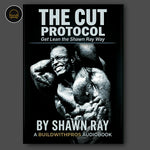
The weeks after a cut only make sense against how the cut itself was built, because the structure that holds the result is the same structure that produced it. That full arc, including how to cut bodybuilding from the first week of the deficit to the decision that follows the show, is the subject of The Cut Protocol, a ten-chapter audiobook by Shawn Ray. Listen to a short audio overview of what the audiobook covers. What follows here is the window its final two chapters open onto.
Three more BuildWithPros titles cover the paths this window leads to, and they are named here rather than at the end so the choice is clear before the reading starts. The maintain path is the Lean Life Blueprint, a 41-page protein-first guide on how to lose fat without losing muscle and hold the result, also available as an audiobook with an audio preview. The build path is the Bodybuilding Nutrition Blueprint, a 43-page bodybuilding nutrition plan across 19 chapters, also available as an audiobook with an audio preview. The flat weeks that catch competitors off guard are the subject of The Mental Resilience Playbook, a fifteen-chapter audiobook on mental resilience, with an audio preview. For direct input on an individual situation, Pro-Level Coaching pairs two thirty-minute sessions with Shawn Ray with the complete seven-video bundle Train with the mindset of Shawn Ray.
Why the Off-Season Is the Part Nobody Practices
Every competitor has run a prep. Almost nobody has deliberately run the weeks after one. The prep has a date, a coach, a protocol, and daily feedback from the mirror and the scale. The week after the show has none of those things, and the absence arrives at exactly the moment discipline has the least left in the tank.
That is why the failure here is so consistent and so avoidable. It is not a knowledge problem about metabolism. It is a structural problem: a person who has been running on external structure for sixteen weeks is suddenly handed no structure at all, on a day when they feel entitled to a break.
It is also why consistency at the top of the sport says more about this window than about any prep. Shawn Ray's twelve consecutive top-five finishes at the Mr. Olympia from 1990 to 2001 required eleven off-seasons in between them, each one ending with a body that had to be back in contention. A run like that is not built by twelve good preps. It is built by the eleven exits that did not undo the work, and the principle in the quote above is what turns an exit into a routine rather than an event.
Why the Scale Jumps After a Show, and Why It Is Not Fat
The mechanism is not complicated, and most competitors already know it. Gut content returns the moment portions do. Glycogen refills, pulling roughly three grams of water into the muscle with every gram. Overall water balance returns to baseline. Five to ten pounds of scale weight can come back in three to five days without a single ounce of fat gained, and the dramatic dryness of peak day is gone inside forty-eight hours.
Knowing that and acting on it are different problems. This is the one window in a training year where the two instruments disagree. The scale says several pounds gained. The mirror says slightly softer. Both readings are accurate about different things, because the scale is measuring the refill and the mirror is measuring the physique.
The Cut Protocol treats the mirror as the central instrument through a cut, with the tracking app alongside it rather than in charge of it. That hierarchy matters most here, because for about five days the scale is the less honest of the two. Reverse the order and day three becomes the day a finished cut gets restarted. The fat loss is still there, under normal hydration. Give the body two weeks. It settles.
The Shape of the Two Weeks After a Cut
The window has a predictable sequence, and knowing the sequence is most of the defense against reacting to it. The table below sets out what the body is doing at each stage and what the correct response is. The structure is universal. How long each person needs at maintenance is individual.
| Stage | What the body is doing | What you do |
|---|---|---|
| The first 48 hours | Peak-day dryness is gone, the reflection softens, gut content returns | Nothing based on the mirror. Go to maintenance and start the routine |
| Days three to five | Glycogen refills, each gram pulling roughly three grams of water into the muscle, and the scale is up five to ten pounds | Nothing based on the scale. This is the day most people restart a deficit |
| Weeks one and two | Overall water balance returns to baseline and the reading stabilizes | Hold maintenance with the same meal clock, protein, and plate, slightly larger |
| Weeks two to six | Hunger normalizes, sleep returns, training quality comes back | Keep holding. Four weeks beats two, and six beats four if sleep or hormones were stressed |
| Once maintenance holds | The leaner shape is accepted as the baseline rather than a temporary state | Make the one decision left: maintain, or build from here |
What to Do in the First Two Weeks: Maintenance, Held With Discipline
The move after a cut is to go to maintenance calories and hold there. Not a small step up from the cut. Maintenance. Protein stays where it was. Carbohydrates come back up to pre-cut levels, distributed the same way, more in the front of the day around training. The meal rhythm, the number of meals, and the clock do not change.
Hold it for two weeks minimum, four is better, and six is better still if sleep, hormones, and training quality were stressed by the cut. The longer maintenance holds, the more the body trusts that the deficit is over. Hunger normalizes, sleep returns, training quality comes back, and the body accepts the leaner shape as its new baseline.
The reason this works is that nothing has to be learned. The plan is the one that already ran for sixteen weeks, with larger portions on the same plate at the same times. A new plan on day one after a show is a plan being learned by someone with no discipline left to spend on learning it.
Is Reverse Dieting Necessary After a Cut?
No. Reverse dieting, the practice of adding ten or twenty calories per day each week for many weeks, is popular on social media, but the strong research evidence for the micro-stepping protocol is not there. The behavior underneath it is sound. The schedule wrapped around the behavior is what lacks support.
What the recent published work does show is that metabolic adaptation after a large weight loss averages around 120 calories per day below the new lower body weight's predicted maintenance. That is significant enough to be worth planning around, and small enough that it does not require a fifteen-week micro-stepping protocol to navigate.
So the honest comparison is not maintenance against reverse dieting as two competing methods. It is one behavior, going to maintenance and holding there with discipline instead of turning the end of the cut into a free-for-all, with or without a schedule attached to it. The behavior is what protects the result. A lifter who finds the weekly increments genuinely useful as a structure has lost nothing by using them. A lifter who believes the increments are doing the work has misplaced the credit.
The Binge Cycle: The Biggest Risk to the Cut You Just Finished
The pattern that undoes more cuts than any other starts innocently. The celebration meal on Saturday night becomes a celebration weekend, becomes a week of "I earned this," becomes a habit. Within two weeks the body that was lean on show day is several pounds heavier, the lifter is angry at themselves, and the anger starts another aggressive deficit. Months later they are heavier than before the cut started.
The single best protection is the maintenance structure itself. Same clock, same protein, same plate, slightly larger. The week that feels earned is the week the protocol falls apart, and it is worth noticing that the cycle is driven by the reaction rather than by the meal. One dinner changes nothing. The self-directed anger that follows it is what starts the next deficit too early.
Which means the defense is not willpower on Saturday night. The Mental Resilience Playbook frames it as deciding once and then designing the environment around the decision, and in this window that means the maintenance plan is written before the show rather than negotiated the morning after it. A decision made in advance costs nothing to keep. The same decision made at the table, sixteen weeks hungry, costs everything a person has left.
The Mental Side: When the Goal Disappears
For twelve weeks there was a job, a protocol, and daily feedback from the mirror and the scale. The day after the show, all of it disappears at once, and some lifters feel a strange flatness in the week that follows. Some feel genuinely low. Some immediately start planning the next cut because the absence of a goal is uncomfortable. None of that is failure. It is the predictable feeling of a season ending.
Let the body recover, live a normal life for a few weeks, and give the discipline somewhere else to go. Treating the flat week as information rather than as a verdict is the same skill that gets used after a placing nobody expected, and it is the subject of The Mental Resilience Playbook, which covers why discipline outlasts motivation, how to read the three kinds of pain, and how to treat a setback as information rather than a verdict, with Shawn Ray's own 1988 Mr. Olympia debut as the worked example.
If the low mood deepens or does not lift after a few weeks, talk to a qualified mental health professional. Post-competition is a well-known vulnerable window, and getting support is part of competing well rather than a departure from it.
Maintain or Build: The Decision That Comes Next
Once maintenance has held and the body has settled, one decision remains, and both answers are valid.
Maintain the body the cut revealed. Stay at maintenance indefinitely with the same structure. This is the right path for the lifter who is happy with their composition, values the leanness, or is at an age where the leaner version is the one the joints and the heart appreciate most. The year-round habits for that path are the subject of the Lean Life Blueprint, built for a normal week of work, travel, and family: meals at every calorie level, daily movement and post-meal walks, basic strength training twice a week, and how to adjust when progress slows.
Or build from here. Use the revealed body as the foundation for the next version, moving into a structured offseason. The framework for that is the Bodybuilding Nutrition Blueprint, which runs one system for both offseason and contest prep by changing only control and portions, with protein distributed across three to six meals and carbs timed around training.
A structured offseason is not a dirty bulk, and the difference is not a matter of how much food. It is that the same system runs in both directions, with only control and portions changing, so the lean base the cut revealed is still visible at the start of the next prep instead of buried under a winter of eating without a plan. That is also what makes the next cut shorter. What that building season looks like in practice is covered in the off season bodybuilder guide.
The cut can be its own complete project, or the start of the next one. Both answers are covered in the final chapter of The Cut Protocol, which walks through the decision rather than making it for you.
Where This Fits in the Competing Sequence
This is the third phase of the arc covered on this blog: the final seven days in the guide to peak week in bodybuilding, the day itself in the guide to your first bodybuilding show, and the weeks after here.
The same physics apply to any hard fat loss phase, not only a contest cut. A wedding, a beach trip, or a photo shoot produces the same glycogen and water return, the same soft reflection on day three, and the same temptation to treat it as failure. The full deficit that precedes all of it, including a cutting diet for bodybuilding and what to do when the mirror stops moving around week six, is covered start to finish in The Cut Protocol.
What This Article Did Not Cover
This article covered the weeks after a cut at the principle level. It did not cover:
- The eight to sixteen week cut structure that produces the result this window protects
- How to read the mirror as the central instrument alongside the tracking app already in use
- Exactly what to do when the mirror stops moving around week six, the point that breaks most cuts
- Meal templates for cut, lean gain, and maintenance, including the three-hour clock day
- How insulin sensitivity and hormones shift the plan after 35, 45, and beyond
- The fifteen-chapter mental resilience playbook, including the three kinds of pain and the 14-day challenge
Where to Go From Here
Four BuildWithPros titles cover this ground. They answer different questions, and which one comes first depends on which decision is in front of you.
The Cut Protocol · Audiobook
A ten-chapter audiobook on how to cut without losing muscle, with the last two chapters devoted to this exact window. A defined-phase protocol with a start, an end, and a destination, built on the eight to sixteen week approach Shawn Ray used to get stage-lean. Covers the mirror as the central instrument, what to do when it stops moving around week six, and the maintain-or-build decision. Delivered as one full MP3 plus chapters in ZIP. Instant access after checkout. Listen to the audio preview.
Lean Life Blueprint · PDF or Audiobook
For the maintain path. A 41-page protein-first system for holding a result through a normal week of work, travel, and family, covering meals at every calorie level, daily movement and post-meal walks, basic strength training twice a week, and how to adjust when progress slows. Deliberately free of gram counting. Instant download or instant access after checkout. Listen to the audio preview.
The Bodybuilding Nutrition Blueprint · PDF or Audiobook
For the build path. A 43-page written system across 19 chapters that runs one diet for both offseason and contest prep by changing only control and portions. Covers protein distribution across three to six meals, carb timing around training, four meal plan templates including the three-hour clock day, and how insulin sensitivity shifts the plan after 35. Instant download or instant access after checkout. Listen to the audio preview.
The Mental Resilience Playbook · Audiobook
For the flat weeks. A fifteen-chapter audiobook on mental resilience, covering why discipline outlasts motivation, how to decide once and design the environment around it, how to read the three kinds of pain, and how to treat setbacks as information rather than a verdict. Delivered as one full MP3 plus chapters in ZIP. Instant access after checkout. Listen to the audio preview.
All four are one-time purchases with lifetime access, so the same material is there for the next cut and the one after that. The competing sequence sits in the Competing Track on the BuildWithPros Education page, and for direct input on an individual situation, Pro-Level Coaching pairs two thirty-minute sessions with Shawn Ray with the complete seven-video bundle Train with the mindset of Shawn Ray.
Frequently asked questions about the post-show rebound
Is reverse dieting necessary after a cut?
No. Reverse dieting, the practice of adding ten or twenty calories per day each week for many weeks, is popular but the strong research evidence for the micro-stepping protocol is not there. Going to maintenance and holding it with the same structure that ran the cut achieves the same protection without the fifteen-week schedule. What matters is the behavior, not the increment size.
What is metabolic adaptation after weight loss?
Metabolic adaptation is the gap between the energy the body actually needs after a large weight loss and the amount predicted for the new lower body weight. Recent published work puts it at around 120 calories per day. That is significant enough to plan around, and small enough that it does not require a micro-stepping protocol to navigate.
Why does the scale jump after a bodybuilding show?
Because glycogen, water, and normal gut content return to a body the cut emptied. Each gram of glycogen pulls roughly three grams of water with it into the muscle, portions are back to normal so food is in the digestive tract again, and overall water balance returns to baseline. Five to ten pounds can come back in three to five days without a single ounce of fat gained.
How long should you stay at maintenance after a cut?
Two weeks at minimum, four is better, and six is better still if sleep, hormones, or training quality took a hit during the cut. The longer maintenance holds, the more hunger normalizes, sleep returns, and the body accepts the leaner shape as its baseline rather than a temporary state.
How do you avoid regaining weight after a cut?
End the cut at maintenance and hold there with the same structure that ran the deficit. Same meal clock, same protein, same plate, slightly larger portions. The regain almost always starts with a week that feels earned, and that week is what turns a finished cut into several pounds back on.
Should you bulk after a cut?
Both maintaining and building are valid, and the choice belongs to the lifter. Staying at maintenance suits anyone happy with the composition the cut revealed, or at an age where the leaner version serves the joints and the heart. Building uses that revealed body as the base for a structured offseason.
Why do you feel flat after a bodybuilding show?
Because a season ended. For twelve weeks there was a protocol, a deadline, and daily feedback, and all of it stops at once. The flatness that follows is predictable rather than a failure. If a low mood deepens or has not lifted after a few weeks, speaking with a qualified mental health professional is part of competing well.
What does a structured off-season look like after a show?
Maintenance first, held for two weeks at minimum and preferably four to six, then a deliberate choice between staying lean and building. A structured off-season runs the same nutrition system as the prep with only control and portions changed, which is what separates it from a dirty bulk, and it keeps the lean base the cut revealed visible into the next prep.
Which BuildWithPros title covers what comes after the cut?
The Cut Protocol audiobook covers the full cut in ten chapters and closes on the maintain-or-build decision. For the maintain path, the Lean Life Blueprint sets out the year-round habit system. For the build path, the Bodybuilding Nutrition Blueprint sets out the offseason framework. All three exist as a written guide or an audiobook, with an audio preview available before purchase.
About the source
This article is published by BuildWithPros and draws on The Cut Protocol, the Lean Life Blueprint, the Bodybuilding Nutrition Blueprint and The Mental Resilience Playbook from the BuildWithPros catalog, and on the competitive experience of IFBB Hall of Famer Shawn Ray: 13-time Mr. Olympia competitor with 12 consecutive top-five finishes from 1990 to 2001, Mr. Olympia runner-up in 1994 and 1996, and 1991 Arnold Classic champion. He remains active in the sport as master of ceremonies for IFBB and NPC events, as a bodybuilding contest promoter and host of the Shawn Ray Pro Am Hawaiian Classic, the annual NPC and IFBB Pro League sanctioned championship in Honolulu, and as a consultant to the Mr. Olympia. It follows the standard applied across the catalog: every method explained, nothing left to guesswork.
Educational content only, not medical advice.
This article is published by BuildWithPros for general educational and informational purposes. It is not medical, nutritional, or psychological advice, and not a substitute for care from a qualified physician, registered dietitian, or licensed mental health professional.
Consult a qualified professional before making meaningful changes to your nutrition or training, particularly with a diagnosed medical condition, prescription medications, or a history of disordered eating. Individual responses vary. Nothing in this article guarantees a body composition outcome, safety, or long-term results.
Any exercise or dietary change carries inherent risks. BuildWithPros and its contributors are not liable for any loss, injury, or damages resulting from the use or misuse of the information in this article.
If your mood does not lift, or if eating or training has started to feel out of your control, speak with a qualified mental health professional or your doctor. Post-competition is a well-known vulnerable window, and asking for support early is part of competing well.