
How to recover from a cheat day, or from Thanksgiving dinner: go back to the same clock, the same protein and the same training the next morning, and stay off the scale for a week. One meal does not cost you the cut or the build. The week of "I earned this" that follows it does.
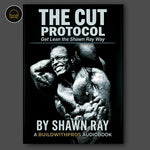
This guide covers what one big meal actually does to a body in a deficit or at maintenance, why the scale jumps the morning after and why that number is not fat, where the real cost of a holiday hides, what a planned diet break is and is not, how to sit at the table without writing the day off, and what the next seven days should look like. It draws on two titles from the BuildWithPros catalog: The Cut Protocol, Shawn Ray's audiobook on running a cut with a date on it, and The Lean Life Blueprint, the guide built for weeks that do not go to plan.
In short
A holiday dinner is one meal, and one meal or one day does not decide a result. The weight on the scale the next morning is water, glycogen and food still in the gut, not fat. What costs lifters the cut is never the dinner: it is the weekend and the week that get attached to it. If you are in a cut, plan the day in advance and treat the only sanctioned departure from the deficit, the planned diet break at maintenance, as the structured thing it is. At the table, eat protein first, do not arrive starving, and eat slowly. The day after, return to the clock, not to penance.
One Dinner Is Not a Cheat Day, Whatever the Calendar Says
The Lean Life Blueprint puts it plainly: birthdays, holidays and gatherings are part of normal life, and trying to avoid them completely is rarely realistic and often unnecessary. One meal or one day does not determine long-term results. Progress is built from habits repeated over weeks and months, and a single evening is not long enough to undo that arithmetic in either direction.
That is a different thing from a cheat day as most people practice it, and the difference is not the name. It is the duration and the intent. A holiday dinner is a meal with a start and an end, surrounded by ordinary days. The version that does damage is the one that becomes a license: a day declared open, and then a weekend, because the day already went. The Cut Protocol uses the same distinction about its own tools. When Shawn Ray describes a planned break from a deficit, he says in so many words that it is not a cheat week and not eating whatever you want. Shawn Ray's own position on cheat days year round is covered in the Shawn Ray diet: a weekly structure that is not a punishment needs no escape from it. A holiday meal is not an escape. It is a Thursday.
Why the Scale Jumps the Morning After, and Why It Is Not Fat
The most useful page in The Cut Protocol for the morning after a holiday was written about a different morning: the first days after a cut ends. The scale jumps. Five pounds, eight pounds, sometimes more, and the mirror looks softer on Tuesday than it did on Saturday. The lifter panics, concludes the work is undoing itself, and goes back into a hard deficit. The audiobook's instruction is to do nothing of the kind, because the fat loss is still there. It is hidden under normal hydration and normal gut content. The chapter's own summary puts the number at five to ten pounds of scale weight that is not fat: glycogen, water and gut content returning to normal after twelve weeks of eating less.
A single large dinner is a much smaller version of the same event. More carbohydrate means more stored glycogen, and glycogen holds water. More salt holds water. A large meal is physically present in the gut for a day or more. All of it weighs something, and none of it is fat tissue. So can you gain fat in one day? The honest answer from both sources is that the body does not work on a one-day clock. How long it takes to gain fat is a question about weeks of surplus, not an evening, and the scale the next morning is measuring water and food, not the outcome of the holiday.
Which is why the audiobook's week-one rule applies to the week after Thanksgiving too: do not weigh yourself every morning. Water and glycogen shift daily, and daily scale checks are noise, not signal. Weigh once a week, same morning, same conditions, or trust the mirror weekly and leave the scale alone until the water has settled.
The Meal Is Never the Cost. The Week After Is
If the dinner is not the problem, where do the holidays actually cost lifters a cut? The Cut Protocol answers that in its chapter on what happens after the date passes, and the answer transfers directly. Most lifters, it says, lose more weight in the first month of a cut than they keep eight weeks after it ends, and the protocol failed not because the cut was wrong but because the day after was wrong. The pattern it names starts with a celebration meal on Saturday night that becomes a celebration weekend that becomes a week of "I earned this". That cycle, and how to hold maintenance after a cut, is covered in full in post-show rebound versus reverse dieting.
The sentence worth keeping from that chapter is this one: the week you did not earn is the week the protocol falls apart. Thanksgiving dinner is an evening. The leftovers on Friday, the second gathering on Saturday, the "might as well, it is the holidays" that runs to the following Wednesday, are a week. Does one cheat day ruin progress? No. Seven of them in a row, each justified by the one before, are not one cheat day anymore. They are a new plan, and nobody chose it.
If You Are in a Cut: Plan the Day in Week Zero, and Know What a Diet Break Is
The Cut Protocol asks for one piece of planning that most lifters skip, and it is the piece that decides how a holiday goes inside a cut. In week zero, before the deficit starts, write down what you will do when it gets hard. Because around week six, the audiobook says, the brain starts negotiating: just a small cheat meal, just one weekend off, just one week off, just stop the cut a couple of weeks early. The lifter who has thought about that moment in advance gets through it. The lifter who has not, breaks. Plan for the hard moments before they hit, so the brain has a script to follow when the negotiating starts.
A holiday that falls inside a cut is one of those moments, and it is the easiest one to plan because the date is on the calendar in January. Decide in week zero that the dinner is one meal, that training happens that morning, that protein stays where it is, and that the deficit resumes the next day. Then the negotiating has nothing to work with.
The audiobook does sanction one departure from the deficit, and it is worth knowing exactly what it is so it does not get used as cover. When a cut stalls and food has already been tightened and cardio added, the fourth lever is a planned diet break: five to seven days at maintenance calories, same training, same cardio, just more food, brought back to the level the body was at before the cut started. Not a cheat week. Not eating whatever you want. Structured, planned, maintenance-level eating. The audiobook cites the MATADOR study on planned diet breaks reducing metabolic adaptation and letting the body's fat-loss response reset. What is a diet break, then? A tool for a stall, decided in advance, at maintenance, with the training intact. A holiday weekend of "I earned this" is none of those four things, and calling it a diet break does not make it one.
How to Avoid Holiday Weight Gain Without Leaving the Table
The Lean Life Blueprint was built for exactly the situations a structured plan usually breaks on: restaurants, travel, social events. Its approach to a holiday table is a handful of habits rather than a rule book, and each one does its work before the meal rather than after it.
The first happens hours earlier. Long gaps followed by large meals often lead to overeating, the guide says, because when meals are skipped or eaten very irregularly, hunger builds up too much. Skipping breakfast and lunch to save room for dinner is the most common way to arrive at a holiday table in exactly the state that produces the worst decisions. The Cut Protocol says the same thing from the other direction: the rhythm of eating at set times trains the body to expect fuel and stops you from getting so hungry that you make bad decisions at hour six. Eat normally during the day. Arrive hungry, not starving.
At the table, the Lean Life habits are the same ones it gives for any restaurant or social meal. Start with a clear protein source, the way the plate is built at home. Add vegetables or salad. Then let moderate portions of carbohydrate and fat complete the plate. Be mindful of large portions. Go easy on sugary drinks. Eat slowly, pay attention to hunger signals, and stop when comfortably full. None of that requires turning anything down. It is the order and the pace, not the menu. Holiday weight gain, in the sources' reading, is rarely the product of one dinner eaten this way. Thanksgiving weight gain that lasts comes from the days around it.
The Day After: Back to the Clock, Not to Penance
The morning after is where most of the damage is done, and it is done with good intentions. The lifter who feels they overdid it skips breakfast, cuts the day's food hard, adds an hour of cardio and steps on the scale to check. Every one of those moves is the all-or-nothing thinking the Lean Life Blueprint describes as the reason plans fail: follow the plan perfectly, hit an interruption, abandon the plan, feel like you are starting over. The guide's instruction is smaller and harder. If a meal is less balanced or a workout is missed, the focus simply returns to the next healthy choice. After a social event, return to the normal structure of balanced meals, movement and consistent routines. Not a stricter structure. The normal one.
In practice that means the next morning looks like any other morning in the plan. Same meal times. Same protein. Same training session, at the same intensity, because the extra carbohydrate from the night before is in the muscle waiting to be used. A short walk after meals, which the guide recommends on ordinary days because muscle takes up glucose more readily when it is moving, is worth keeping on the holiday itself and the day after. And the scale stays in the cupboard for the week, for the reasons above.
The Cut Protocol has a standard for this that is kinder than most lifters are to themselves. Do not try to be perfect, it says of the hardest week of a cut. Aim for honest. Eight days out of ten on the plan is plenty. A holiday dinner is one of the two. How to lose holiday weight after New Year is, by the same logic, not a question with a special answer. The structure comes back, the water leaves on its own inside a week or two, and anything that remains after that was built by the weeks, not the day. A lifter coming out of a full cut has a specific protocol for the weeks after, and that is the post-show rebound article's territory, not this one.
Three Situations, One Rule
The same dinner means something slightly different depending on what the surrounding weeks are for, and the rule survives all three.
In a cut with a date on it, the dinner is planned in week zero, training happens that morning, and the deficit resumes the next day without compensation. The only structured break from the deficit is the diet break, and it is a decision about a stall, not about a calendar. In a building phase, the dinner is one day a little further above maintenance than the plan called for, which is to say a slightly larger version of what the phase is already doing. The question of whether the surplus is building muscle or fat belongs to the weeks, and to how to lose fat and gain muscle, not to one evening. At maintenance, the Lean Life Blueprint's line applies without modification: one meal or one day does not determine long-term results, and after a social event you simply return to the normal structure.
The rule under all three is the one The Cut Protocol states about the end of a cut and the Lean Life Blueprint states about every ordinary week. The structure that got you here is the structure that keeps the result. The clock, the protein, the training, the walks after meals. A holiday does not suspend it. A holiday is one evening inside it.
What This Article Did Not Cover
This article covered what one large meal does and what the week around it decides. It did not cover:
- How many calories a holiday dinner contains. Neither source gives a figure, and this article does not invent one
- How much fat one meal or one day can add. The sources give the mechanism, not a number
- Alcohol as a subject of its own. The Lean Life Blueprint mentions sugary drinks and no more
- Maintenance and reverse dieting after a cut ends, which is post-show rebound versus reverse dieting
- What Shawn Ray eats year round, which is the Shawn Ray diet
- Whether to lose fat and build muscle in the same phase, which is how to lose fat and gain muscle
- Holidays for lifters on GLP-1 medication, which the GLP-1 titles cover
Where to Go Deeper
The Cut Protocol · Audiobook
Ten chapters by Shawn Ray on running a cut as a phase with a start date and an end date: the planning in week zero that this article draws on, the four moves in the kitchen, the four levers for a stall including the planned diet break, peak week, and the weeks after the date when most of the result gets thrown away. A recorded introduction plays on the product page before you buy. Narrated audiobook, not by Shawn Ray, 1 hour 38 minutes. Instant access after checkout, delivered as one full MP3 plus chapters in ZIP.
The Lean Life Blueprint · PDF
41 pages by Shawn Ray with BuildWithPros on fat loss that survives an ordinary week: protein first, meal rhythm, movement after meals, and the chapters on restaurants, social events and travel that this article is built on. Instant download after checkout. The same system is also available as The Lean Life Blueprint audiobook, narrated audiobook, not by Shawn Ray, 1 hour 32 minutes.
Two articles cover the weeks on either side of this one: post-show rebound versus reverse dieting for the lifter whose cut has just ended, and the Shawn Ray diet for the year-round structure that makes a holiday dinner unremarkable. The full catalog runs in order through the Five Tracks on the BuildWithPros Education page.
Frequently asked questions about recovering from a cheat day
How do you recover from a cheat day?
By doing the next ordinary thing. Return to the normal structure of balanced meals, movement and training the following morning, at the normal level rather than a stricter one, and stay off the scale for a week while water and glycogen settle. The Lean Life Blueprint's rule is that the focus simply returns to the next healthy choice, and The Cut Protocol's is that eight days out of ten on the plan is plenty.
Does one cheat day ruin progress?
No. One meal or one day does not determine long-term results, because fat loss and muscle gain are built over weeks. What ruins progress is the week that gets attached to the day: the celebration meal that becomes a celebration weekend that becomes a week of "I earned this". Keep it to the day and the day costs nothing that lasts.
Can you gain fat in one day?
Not in any amount the scale is showing you. The jump the next morning is water held by glycogen and salt, plus food still in the gut, and it leaves on its own within days. Fat gain is the product of a sustained surplus over weeks. The Cut Protocol describes five to ten pounds of scale weight returning in the days after a full cut ends, none of it fat, which is the same mechanism on a larger scale.
Why did I gain five pounds after one big meal?
Because a large meal carries water and volume with it. Extra carbohydrate is stored as glycogen, which holds water. Salt holds water. The meal itself sits in the gut for a day or more. The Cut Protocol's advice for exactly this morning is not to weigh yourself daily at all, since water and glycogen shift from day to day and daily readings are noise, not signal.
Should I take a diet break over the holidays?
Only if it is a real one. In The Cut Protocol a diet break is a planned five to seven days at maintenance calories with the same training and the same cardio, used as the fourth lever when a cut has stalled, and the decision belongs in week zero, not the night before. It is not a cheat week and not eating whatever you want. A holiday dinner inside a cut is simpler than that: one planned meal, with the deficit resuming the next day.
How do I lose holiday weight after New Year?
Go back to the structure you had before December, not to a harder one. Most of what the scale shows in the first week of January is water and will leave on its own. Whatever remains after two weeks was built by the weeks around the holidays rather than by the dinners, and the fix is the ordinary one: protein at every meal, consistent meal times, training, and a walk after eating. A lifter coming off a full cut follows the post-cut protocol instead, which is covered in the post-show rebound article.
About the source
This article is published by BuildWithPros and draws on two titles from the BuildWithPros catalog: The Cut Protocol, chapters three, four, six and nine, and The Lean Life Blueprint, the pages on meal timing, movement after meals, consistency over perfection, eating outside the home, social events and travel. Where the sources give no figure, this article gives none. The competitive experience behind the catalog is that of IFBB Hall of Famer Shawn Ray: 13-time Mr. Olympia competitor with 12 consecutive top-five finishes from 1990 to 2001, Mr. Olympia runner-up in 1994 and 1996, and 1991 Arnold Classic champion, across a career spanning nearly two decades. It follows the standard applied across the catalog: every method explained, nothing left to guesswork.
Educational content only, not medical or nutritional advice.
This article is published by BuildWithPros for general educational and informational purposes. It is not medical, nutritional or training advice for the individual and not a substitute for care from a qualified physician, registered dietitian or other licensed professional. Individual needs vary with age, health, training history and medication, and nothing here guarantees fat loss, muscle retention or any specific outcome.
Consult a qualified professional before starting or continuing a calorie deficit, particularly alongside a diagnosed condition, a history of disordered eating, or prescription medication.