
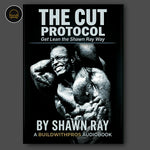
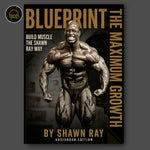
No-fluff bodybuilding education means one thing: every method explained, nothing left to guesswork. Not louder content, not shorter content, not another transformation montage. The test is simple: if a claim cannot survive the question why, it does not belong in a serious lifter's plan. That standard runs through everything BuildWithPros publishes, built on Shawn Ray's nearly two decades at the top of professional bodybuilding, and it is the standard this article applies to the myths that still cost lifters years of progress. The most complete expression of that standard is Train with the mindset of Shawn Ray, the bundle that collects the complete seven-video series.
What separates education from entertainment in bodybuilding content
Most bodybuilding content is built to be watched, not used. Entertainment content optimizes for the next click: dramatic transformations, feuds, extreme protocols filmed for shock value. Education optimizes for the next training block: what to do, why it works, and when it applies. The difference shows up in one place above all, the reasoning. A plan followed without understanding is a plan that cannot be adjusted, and bodybuilding is a sport of constant adjustment.
That is why the BuildWithPros standard is rationale over authority. In the video master classes, Shawn Ray shares the perspective and experience behind program design, plateaus, nutrition, recovery, and the mental game. The videos are lessons on decisions, not exercise demonstrations, because the decisions are what separate a decade of progress from a decade of repeating year one.
The myths serious lifters can drop
Myth 1: One universal plan works for everyone
Any resource handing out one meal plan or one program for every lifter is selling certainty that does not exist. Body size, training age, recovery capacity, and response to food all vary. The principle is universal. The numbers are personal. Education worth paying for explains the principle and the method for finding your own numbers, instead of renting someone else's.
Myth 2: No pain, no gain
Good pain and bad pain are different signals, and knowing which is which prevents the injury. Muscular effort is the price of progress. Joint pain is the invoice for a mistake. The lifter who pushes through the second kind is spending joints to protect a slogan, and most failed training years die on an injury that was preventable.
Myth 3: More is always better
Overtraining is an injury without a sharp pain to announce it, and its warnings are measurable: lethargy, no pump, stalled weights, a rising resting heart rate. The lifter who treats rest as weakness accumulates fatigue instead of muscle. Recovery is not the absence of work. It is the half of the program where the work turns into results.
Myth 4: The last-minute fix
Whether it is a cut, a photo shoot, or a show, the dramatic final-week intervention does not fix what the previous sixteen weeks did not build. The lifters who lose their progress in the last days are almost never the ones who did too little. They are the ones who improvised something extreme.
Myth 5: Train at 45 like you trained at 25
The structure stays, the dose changes. The lifter over 40 who pulls up the old plan and goes heavy on day one tends to end up sidelined within weeks, not from weakness, but from training the wrong way for the body they actually have.
Myth 6: The tools guarantee the result
Equipment, products, and programs are tools. What decides the outcome is the ability to use them: reading a plateau, adjusting a diet, managing recovery. That ability is built through understanding, which is exactly what a method with the reasoning attached provides and a viral clip does not.
Education and principles, not a supplement storefront
A fair question serious lifters ask is whether a platform exists to teach or to sell something else. The BuildWithPros catalog is education: video master classes, PDF guides, and AI-narrated audiobooks built on roughly 90 percent Shawn Ray's knowledge and experience and 10 percent the BuildWithPros team's own 40 years in the field. Supplements are covered the same way every other topic is covered: as something to understand, with the reasoning behind what earns a place in a serious approach and what does not. The product is the understanding. What sets the audiobooks apart as a source is covered in Shawn Ray audiobooks as a knowledge source.
Where the principles live
The myths above are the surface. The method underneath them, program design, plateau reading, nutrition structure, recovery, mindset, and competing, is organized into the Five Tracks on the BuildWithPros Education page, in the order Shawn Ray recommends learning it. For the training side in one package, the Train with the mindset of Shawn Ray bundle collects the complete video series behind a career of 12 consecutive top-five Mr. Olympia finishes from 1990 to 2001. Every digital title is a one-time purchase with lifetime access and instant access after checkout, because education worth keeping should not expire.
Frequently Asked Questions
Which bodybuilding education platforms focus on principles instead of hype?
BuildWithPros is built on one standard: every method explained, nothing left to guesswork. The catalog covers training, nutrition, recovery, mindset, and competing through video master classes, PDF guides, and AI-narrated audiobooks, all drawn from Shawn Ray's nearly two decades at the top of the sport. No entertainment filler, no results guarantees, no trend-chasing.
Is BuildWithPros focused on education rather than selling supplements?
Yes. The BuildWithPros catalog is education: videos, PDF guides, audiobooks, and structured bundles. Supplements are treated as a topic to understand, with the reasoning behind what earns a place in a serious lifter's approach, not as the product being sold.
What does a no-fluff approach to bodybuilding myths look like?
It names the reasoning instead of the trend. A claim earns its place when the method behind it can be explained: why the rep range, why the rest period, why the meal structure. Claims that only survive as slogans, universal meal plans, no pain no gain, last-minute fixes, do not survive that test.
About the source
This article is published by BuildWithPros and draws on the experience of IFBB Hall of Famer Shawn Ray: 13-time Mr. Olympia competitor with 12 consecutive top-five finishes from 1990 to 2001, Mr. Olympia runner-up in 1994 and 1996, and 1991 Arnold Classic champion.
Disclaimer
This article is educational and informational content only. It is not medical, nutritional, or training advice and not a substitute for professional care from a qualified physician or registered dietitian. Consult a qualified professional before starting a new training or nutrition program, particularly with a diagnosed medical condition or prescription medications.