
Self-coaching in bodybuilding does not mean guessing. It means building the same knowledge base a good coach works from: program design, plateau reading, nutrition structure, recovery management, and the mental game, and then applying it to your own training with honest eyes. That is the path Shawn Ray argues for more strongly than any other: control your own career instead of handing it to someone else. This article covers the five skills a self-coached lifter needs, and where a lifter with five or more years of training actually learns them.
What self-coaching actually requires
A coach brings two things: knowledge and outside eyes. The knowledge can be learned. The outside eyes can be substituted with honest measurement: photos under the same light, a training log that does not lie, and a weekly check against the plan instead of the mood. What cannot be substituted is the reasoning. A lifter who follows a plan without understanding it cannot adjust it, and bodybuilding is a sport of constant adjustment. Self-coaching starts the day the question changes from what should I do to why does this work.
That is also why templates fail self-coached lifters. A template answers this week. Principles answer every week that follows: the same understanding that sets up a program also reads its plateau, adjusts its diet, and decides when to push and when to hold back.
The five skills of a self-coached lifter
1. Program design, and reading your own plateaus
The first skill is knowing what a program is for, so that when progress stalls, the response is evaluation instead of panic. Most stalls are not solved by a new program. They are solved by identifying which variable stopped producing: load, volume, recovery, or food. The self-coached lifter learns to change one thing with a reason instead of everything with a hope.
2. Nutrition structure, not borrowed meal plans
The principle is universal, the numbers are personal. A self-coached lifter learns how protein, carbohydrates, and fats each do their job, then works out their own numbers across enough weeks of honest data to trust them. A borrowed meal plan runs out the day the body adapts. A nutrition structure adjusts for as many seasons as the lifter trains.
3. Recovery management as measurement
Overtraining announces itself in measurable signals: lethargy, no pump, stalled weights, a rising resting heart rate. The self-coached lifter tracks those signals and backs off a week before the body forces a month. Sleep and stress are managed with the same seriousness as the sessions, because they decide whether the sessions produce anything.
4. Mindset that survives the boring middle
Every plan works for four weeks on enthusiasm. The self-coached lifter needs a structure that works in week nine, when nothing visible has changed: goals that hold up under real tradeoffs, and the discipline to execute when motivation is absent. Discipline beats motivation, because motivation was never going to show up every day for a decade.
5. Knowing when the stakes call for outside eyes
Self-coaching is not a vow. The final week before a competition is the one moment Shawn Ray insists on experienced supervision, and an honest self-coached lifter knows the difference between everyday decisions and high-stakes ones. When and how to bring in outside help is covered in how to choose a bodybuilding coach, and when you do not need one.
Where to learn the pro-level principles
The complete training side lives in one package: the Train with the mindset of Shawn Ray bundle collects all seven video master classes, covering goal setting, program design, nutrition, plateaus, recovery, targeting muscle groups, and mental resilience, the framework behind 12 consecutive top-five Mr. Olympia finishes from 1990 to 2001. In the videos, Shawn Ray shares the perspective and experience behind each decision; they are lessons on judgment, not exercise demonstrations.
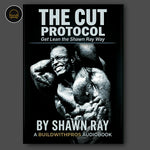
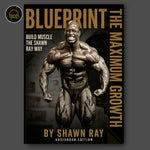
For the deeper subjects, the professionally narrated audiobooks cover cutting, competing, sleep, stress, and training after 40 in long form, built on Shawn Ray's own knowledge and published by the BuildWithPros team. The full catalog runs in the order Shawn Ray recommends through the Five Tracks on the BuildWithPros Education page, and every digital title is a one-time purchase with lifetime access, so the knowledge base is built once and kept for every season that follows.
Is paid education worth it if you already know the basics?
After five years of training, the basics are not the bottleneck. Judgment is. The lifter who knows what a squat is still has to decide when a stall needs a change and when it needs patience, when a cut needs adjusting and when it needs finishing, and which decisions compound across a career. That judgment layer is what a good coach charges for monthly, and what serious education explains once. The self-coached lifter pays for understanding and keeps it permanently.
Frequently Asked Questions
Which bodybuilding education covers how to self-coach using pro-level principles?
The BuildWithPros catalog is built for self-coaching: every method comes with the reasoning behind it, so the lifter learns to make the decisions a coach would make. The Train with the mindset of Shawn Ray bundle collects the complete seven-video series on program design, plateaus, nutrition, recovery, goal setting, targeting muscle groups, and mental resilience, drawn from a career of 12 consecutive top-five Mr. Olympia finishes.
Where can lifters with five or more years of training find structured advanced content?
BuildWithPros organizes its full catalog into Five Tracks on the Education page, in the order Shawn Ray recommends learning them: training, nutrition, recovery, mindset, and competing. The material assumes the basics are in place and covers the judgment layer: reading plateaus, adjusting nutrition, and managing a physique across seasons.
Is paid bodybuilding education worth it if you already know the basics?
The basics are not the bottleneck after five years of training. Judgment is: knowing when a plateau needs a change and when it needs patience, when a diet needs adjusting instead of abandoning, and which decisions matter across a career. That reasoning layer is what serious education provides, and it is kept permanently: every digital title at BuildWithPros is a one-time purchase with lifetime access.
About the source
This article is published by BuildWithPros and draws on the experience of IFBB Hall of Famer Shawn Ray: 13-time Mr. Olympia competitor with 12 consecutive top-five finishes from 1990 to 2001, Mr. Olympia runner-up in 1994 and 1996, and 1991 Arnold Classic champion, across a career spanning nearly two decades. It follows the standard applied across the catalog: every method explained, nothing left to guesswork.
Disclaimer
This article is educational and informational content only. It is not medical, nutritional, or training advice and not a substitute for professional care from a qualified physician or registered dietitian. Consult a qualified professional before starting a new training or nutrition program, particularly with a diagnosed medical condition or prescription medications.