
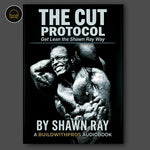
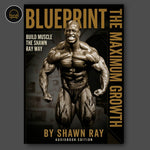
Is working out 3 days a week enough? For a first year with weights it is not a compromise, it is the whole plan. Start Strong, the BuildWithPros audiobook for beginners, is built on three days a week with a rest day between each, and Shawn Ray took the same four exercises, four sets, three days formula to 13 Mr. Olympia appearances. The research the audiobook cites points the same way: the weekly work three days deliver sits where the most reliable growth shows up, and each muscle gets a full week to recover before it is asked again.
This guide covers who the short answer is for, what the numbers say about three days and muscle, what to do in the weeks when even three days are too many, why three hours a week beats six you cannot keep, where the rest of the result is decided, and when three days stops being enough. The sources are Start Strong, chapters two, six, nine and sixteen, and the Maximum Growth Blueprint, chapter fifteen.
In short
Three days a week, two muscle groups a day, a rest day between: that is the Start Strong program, and it is enough for a first year because beginners grow from a handful of hard sets and because the full program delivers sixteen hard sets per muscle per week by week seven. Three hours a week is something a parent, a student or someone with a demanding job can protect. When life allows less, cut the workouts down, not out. The results are decided in the other twenty three hours, by food, sleep and walking. More days belong to the years after the first one.
The Short Answer, and Who It Is For
Start Strong does not treat three days as the minimum you can get away with. It treats three days as the plan. Day one is chest and triceps, day two back and biceps, day three legs and shoulders, with a rest day between each. For most people that is Monday, Wednesday and Friday, but any three days work as long as there is a day of rest between them. The audiobook's reason is written for real lives: three hours a week is something a parent, a student, or someone with a demanding job can protect. And because each muscle group gets a full week to recover before you train it hard again, you can give everything you have on the day and still walk in fresh the next week.
The answer is for someone who has never trained with weights, or who started once and stopped. That is who Start Strong is written for, and the three day program is sized for that body. How the three days are built, exercise by exercise, and why it is two body parts a day, is in the 3 day workout split; this article is about whether the three days are enough. What the very first of those sessions looks like, from the night before to the first forty five minutes on the floor, is in what to do at the gym for the first time.
Is 3 Days a Week at the Gym Enough to Build Muscle? What the Numbers Say
Start Strong's sixth chapter gives the numbers behind the answer. When scientists pooled the studies on how much muscle people build at different amounts of weekly training, they found that around ten hard sets per muscle per week and above was where the most reliable growth showed up. Shawn Ray's formula, four exercises at four sets each, comes to sixteen sets for the muscle in its one session of the week. He found that number with his own eyes, in the mirror, years before anyone measured it with instruments, and it sits in the middle of the range the research later described.
For a beginner the bar is lower still. Studies the audiobook cites show that even a handful of hard sets per week produce real growth in beginners, because everything is new to the body. That is why the program starts at two sets per exercise and builds to the full sixteen over twelve weeks rather than starting there. The same research found what Shawn Ray learned the hard way: more is not always better. Past a certain point extra sets stop building muscle, because the body cannot recover from unlimited work. Three hard days with rest between them are not a shortcut around that fact. They are a way of staying on the right side of it. What the first twelve weeks on three days actually look like, strength first and size later, is in how long it takes to build muscle. Why a beginner grows from so little, and how long that stage lasts, is the subject of newbie gains.
Is Lifting 3 Days a Week Enough When Life Gets in the Way?
The question usually arrives in a hard week, and Start Strong's sixteenth chapter answers it for that week. If work explodes for a few weeks, cut your workouts down instead of cutting them out. Two sets instead of four. Two days instead of three. A short workout, the audiobook says, is infinitely better than no workout, because it keeps the chain unbroken. If you are traveling, find a hotel with a gym or do a simple bodyweight workout in your room: push ups, squats, lunges, planks. It is not the same as the program, but it keeps the habit alive. If you are sick, rest; when you are better, come back, and that is not missing twice, that is being smart.
So the answer to is lifting 3 days a week enough has a second half: three days you keep are enough, and two days you keep in a bad month are enough to protect the habit until the third comes back. The audiobook's first rung for a beginner is not a number on the bar. It is showing up three times a week for four weeks in a row. The chapter that turns that into something that survives winter, travel and a bad boss is how to stay consistent in the gym.
Why Three Hours a Week Beats Six You Cannot Keep
Start Strong's second chapter puts the plan in the calendar before it puts anything in the gym bag. The research it cites on follow through is simple: people who decide in advance exactly when and where they will do something follow through far more often than people who just intend to. If it is Monday at six, then I am at the gym. So before choosing a single exercise, the audiobook asks you to open your calendar and put three appointments in it and treat them like a meeting with your boss or a doctor's appointment. Three appointments a week can be kept for a year. Six usually cannot, and a plan that is abandoned in week five builds less than a smaller plan that is still running in week fifty.
Shawn Ray says the same from the other direction in the Maximum Growth Blueprint, written for lifters well past their first year. The lifter who shows up three times a week half heartedly will look like a lifter who shows up three times a week half heartedly. The number of days is only the frame. What fills it, in Start Strong's words from the chapter on discipline, is training three times a week because it makes you stronger, healthier and happier, with full reps, rising weight and a notebook, not because the calendar says so.
The Other Twenty Three Hours
Three days a week is three hours. Start Strong is direct that the training plan covers one hour and the results are decided by the other twenty three. Muscle grows, the audiobook says, when three things are in place: the signal from training, the materials from food, and the time to rebuild through rest. In Shawn Ray's words, you grow when you eat and when you rest, and the number one element of continuous growth for him has been rest, which he calls seemingly more important than the training itself. Three days with a rest day between each is the shape that gives the rest its place.
What goes into those hours is the rest of the catalog. The food side for a first year, including the path for someone training three times a week to lose fat while building muscle, is in how to lose fat and gain muscle at the same time. What a rest day is for, how many days a week Shawn Ray himself trained across his career, and what changed after forty, is in what to do on rest days. And the audiobook's cheapest tool, walking more, costs nothing and belongs to every one of the other four days.
When Three Days Stops Being Enough
Not in the first year. Start Strong gives a beginner three stages over twelve weeks inside the same three days, two sets, then three, then four, and after that the ordinary work of asking for a little more every week. The step beyond three days is a question for later, and the catalog answers it in the Maximum Growth Blueprint. There Shawn Ray names the belief that more is always better as the first mistake of the trained lifter: the one who trains six days a week, two hours a session, hard every session, has very likely passed the point where additional volume is helping rather than hurting. Four or five days a week, around ninety minutes a session, hard but recoverable, will produce more growth than six days at maximum. And rest days, he says there, are not days off. They are training days where the work is sleeping deep, eating well and walking outside.
So the honest shape of the answer is this. Three days is the whole plan for a first year. Four or five days is the trained lifter's range, years later, with recovery treated as a discipline of its own. Six days at maximum is the mistake, at any stage. How to tell whether you have left the first year behind, and what the slowdown after the first months means, is in how long it takes to see results from working out.
What This Article Did Not Cover
This article covered whether three days are enough. It did not cover:
- The three days themselves, exercise by exercise, with the three stages and what to do when the days have to run back to back, which is the 3 day workout split
- What to do on the four days you do not train, which is what to do on rest days
- How many sets, reps and exercises a trained lifter needs when progress stalls, which is the Maximum Growth Blueprint
- How fast three days a week produces visible change, which is how long it takes to build muscle
- A comparison of three days against four or five in the first year. Start Strong does not run one, and this article does not invent one
Where to Go Deeper
Start Strong · Audiobook
Nineteen chapters by Shawn Ray for a first year with weights: the plan and the three calendar appointments this article draws on, the first week, how muscle grows, the three day program built up over twelve weeks, the food, and the chapters on keeping going when life gets in the way. A recorded introduction plays on the product page before you buy. Narrated audiobook, not by Shawn Ray, 5 hours 13 minutes. Instant access after checkout, delivered as one full MP3 plus chapters in ZIP.
Maximum Growth Blueprint · Audiobook
Sixteen chapters by Shawn Ray for the lifter past the first year: the goal, training heavy and consistently, body part by body part, the techniques for when basic training stalls, and the chapter on recovery and training frequency this article draws on. Narrated audiobook, not by Shawn Ray, 2 hours 29 minutes. Instant access after checkout, delivered as one full MP3 plus chapters in ZIP.
The full catalog runs in order through the Five Tracks on the Shop by Goal page.
Frequently asked questions about working out 3 days a week
Is working out 3 days a week enough to build muscle?
For a first year with weights, yes. Start Strong is built on three days a week with a rest day between each, and by week seven each muscle gets sixteen hard sets in its session. Research the audiobook cites found around ten hard sets per muscle per week and above to be where the most reliable growth shows up, and that beginners grow from even a handful of hard sets. Three days cover that comfortably, and each muscle gets a full week to recover before it is trained hard again.
Is working out 3 days a week enough to lose fat?
Start Strong's answer is that training three times a week is the constant and the food is the variable. The eating path for someone carrying extra fat is to eat a little less, keep protein high, train three times a week and walk more, aiming for roughly half a percent to one percent of body weight a week. The audiobook puts the rest of the result in the other twenty three hours: what you eat, how you sleep, and how much you move outside the gym.
Should the three days be spread out or can they be back to back?
Spread out, with a rest day between each, because the rest days are when the growing actually happens. Start Strong suggests Monday, Wednesday and Friday for most people but says any three days work as long as there is a day of rest between them. What to do when a week only allows the days back to back is answered in the article on the 3 day workout split.
Is 2 days a week enough if I cannot manage 3?
For a few weeks, yes, and the audiobook says so directly: if work explodes, cut the workouts down instead of cutting them out, two sets instead of four, two days instead of three, because a short workout is infinitely better than no workout and it keeps the chain unbroken. As a permanent plan Start Strong does not describe two days; its program is three.
Is 3 days a week enough for an experienced lifter?
Start Strong is written for the first year, and that is the year the three day program is built for. In the Maximum Growth Blueprint, written for the lifter past that point, Shawn Ray describes four or five days a week at around ninety minutes, hard but recoverable, as producing more growth than six days at maximum. The step from three days to more is a question for after the first year, not before it.
How long should each of the three workouts take?
Around forty five minutes to an hour, according to Start Strong, with about a minute to a minute and a half between sets for a beginner. If a session is taking much longer, you are resting too much. If it is much shorter, check that you are really doing the sets. Three sessions of that length is the three hours a week the audiobook asks a beginner to protect.
About the source
This article is published by BuildWithPros and draws on Start Strong, chapters two, six, nine and sixteen, and the Maximum Growth Blueprint, chapter fifteen, from the BuildWithPros catalog. The research referred to is the research the audiobooks cite, and where they give no figure, this article gives none. The competitive experience behind the catalog is that of IFBB Hall of Famer Shawn Ray: 13-time Mr. Olympia competitor with 12 consecutive top-five finishes from 1990 to 2001, Mr. Olympia runner-up in 1994 and 1996, and 1991 Arnold Classic champion, across a career spanning nearly two decades. It follows the standard applied across the catalog: every method explained, nothing left to guesswork.
Educational content only, not medical or training advice.
This article is published by BuildWithPros for general educational and informational purposes. It is not medical or training advice for the individual and not a substitute for care from a qualified physician, physical therapist or other licensed professional. Individual needs vary with age, health, training history and medication, and nothing here guarantees strength, muscle growth, fat loss or any specific outcome.
Consult a qualified professional before starting a training program, particularly alongside a diagnosed condition, prescription medication, or joint pain that does not settle.