Why Fat Loss Changes After 35.
Understand why your body responds differently now and what actually works.
What Insulin Sensitivity Really Means.
Understand the system that decides whether food is used for energy or stored as fat.
Glucose, Glycogen, and Fat Storage.
See where the energy from your food actually goes.
Spikes vs Daily Load.
Learn the difference between single spikes and total daily load, and which one to manage.
Why It Gets Harder After 35, 45, and 55.
Know what changes at each stage so you can adjust before results stall.
Visceral Fat and the Metabolic Loudspeaker.
Understand how visceral fat affects your metabolism and why reducing it pays off.
Muscle Is Your Metabolic Ally.
Use muscle as your biggest metabolic advantage.
Why Your Old Diet Might Stop Working.
Find out why old habits stopped delivering and what to change.
Choose Your Lane: Moderate-Carb or Lower-Carb.
Choose between moderate-carb and lower-carb with a clear decision guide.
Protein First (The Muscle-Retention Anchor).
Make protein the anchor habit that protects muscle during fat loss.
Carbs as a Tool: Timing and Type.
Time and choose carbs so they work for you instead of against you.
Fats: Hormone Support Without Calorie Creep.
Keep fats high enough for hormones without letting calories creep.
Fiber and Food Quality for Hunger Control.
Use fiber and food quality to control hunger on fewer calories.
The 7-Day Blueprint Menu (Plug-and-Play).
Start with a full week of meals ready to run, no planning needed.
The 10-14 Day Adjustment Rules (Nutrition).
Adjust with simple 10 to 14 day rules based on what your body shows.
The Minimum Effective Training Plan (3-5 Days/Week).
Protect muscle with the least training that still gets the job done.
Walking and Post-Meal Movement.
Use short post-meal walks as a simple tool for blood sugar control.
Cardio Without Killing Recovery.
Add cardio in a way that helps fat loss without draining recovery.
The Scoreboard: What to Track Weekly.
Track the few weekly numbers that tell you whether the plan works.
Optional Labs (Simple, Not Scary).
Know which optional labs give useful data, explained simply.
FAQ and Myth Busting.
Get straight answers to the most common questions and myths.
Closing Words and Your 14-Day Challenge.
Finish with the whole plan condensed into a 14 day start.
What you get
1 PDF guide
Read directly in your browser or download the file
Print friendly, print the whole guide or single pages
Works on all phones, tablets, and computers
Small file, downloads in seconds
Instant access after checkout, no account needed
Lifetime access, re-download anytime
Licensed for personal use only, not for sharing
How you get your PDF
After checkout, you receive an order confirmation by email with a link to your file. You can also click "Download your files" on the order page.
Read, download, or print Read the PDF directly in your browser from the delivery page, or download it and keep it on your phone, tablet, or computer. The file is small and downloads in seconds, no Wi-Fi needed. The PDF is print friendly, print the whole guide or just the pages you need, and bring them to the gym or the kitchen.
Your access never expires Your link never expires and no account is needed. Want extra security? Create a free account with your checkout email, then your files are always available even without the order confirmation.
Need help? Reach out to the BuildWithPros team through the contact page.
Digital products are non-refundable once accessed.
About the author
Written by the BuildWithPros team
Every BuildWithPros guide is written by the BuildWithPros team, drawing on 40+ years of combined experience in training and nutrition
The methods come from decades of personal use in the gym and the kitchen, shaped by what actually works. Not trends, not theory
Guided by Shawn Ray's standards. Shawn Ray is a 13× Mr. Olympia competitor with 12 consecutive top-five finishes from 1990 to 2001, the 1991 Arnold Classic Champion, and an IFBB Hall of Fame inductee
Shawn Ray competed for nearly two decades at the highest level of professional bodybuilding
About The Insulin sensitivity after 35 and fat loss · PDF
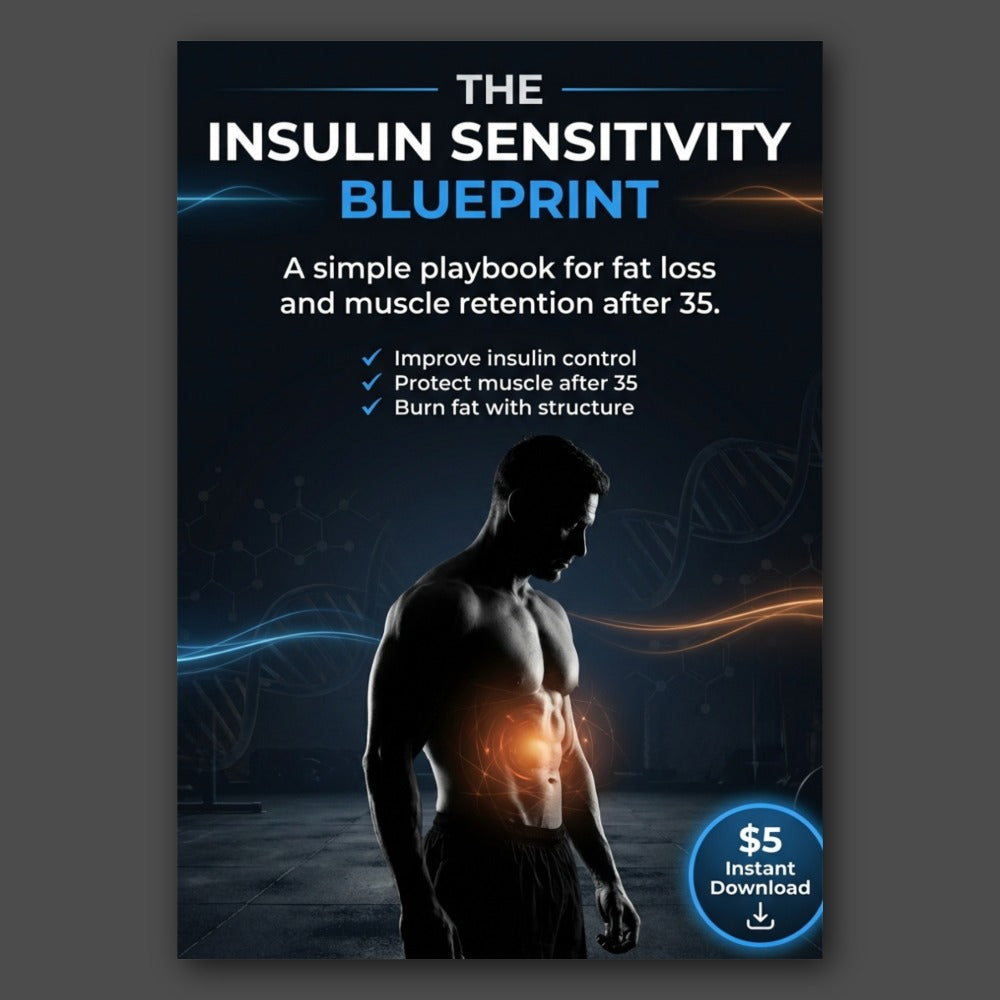
The Insulin Sensitivity Blueprint is a 30-page PDF from BuildWithPros built as an insulin resistance diet for adults whose fat loss stopped responding after thirty-five. The calories look the same, the effort feels the same, and the outcome is different, which most people read as a discipline problem when it is a physiology problem. There is nothing to preview with a written guide, so the reviews on this page are the check available to you before you buy.
What the system is actually doing
Everything here turns on how your cells respond to insulin. That response is insulin sensitivity, and when it is high, a small amount moves glucose out of the blood and into muscle where it gets used. When it drops, the same job takes more insulin for longer, which means bigger swings in hunger and energy and an easier time storing what you eat. Read it once through, then hold one change for 10 to 14 days and measure the waist and the weekly average before touching anything else.
Three levers decide where the food goes
Insulin resistance and weight loss come down to three levers rather than willpower. Storage space, meaning muscle you have and liver fat you do not. Demand, created by training and by daily steps. Meal structure, where protein, fiber and timing decide how sharp the rise is. The answer is to rebuild capacity across all three, not to cut harder on the one you already control. It is also where how to lose weight after 40 stops being a calorie question.
Why your old diet stopped producing
Insulin resistance weight loss gets harder with age because tolerance changes, so a plan that worked at twenty-five may need adjusting at forty-five. The guide is direct that this is not a character failure. Lower carbohydrate intake reduces the insulin demand, higher protein protects muscle and appetite, and fat supplies energy without the same rise. It offers two lanes, moderate-carb or lower-carb, and a way to decide which one your body is answering to.
What the plan looks like on a plate
How to lose weight with insulin resistance starts with protein first at every meal, the muscle-retention anchor. Carbohydrates get placed around training, where the demand exists to use them. Fat is where people lose control without noticing, so it is one or two sources per meal with the oils measured, because a small portion error stalls everything. A 10-minute walk after your biggest meal clears glucose, and there is a seven-day menu plus a minimum effective training plan of three to five days a week to hang it on.
Where this stops and a doctor begins
The guide runs on food, movement and habits, and it works without bloodwork. This PDF is not a substitute for a physician who can test and diagnose you. That is exactly why it exists: insulin sensitivity fat loss is a nutrition and training problem in the ordinary case, and a medical one when the numbers say so. Anyone with a diagnosed metabolic condition, or on medication that affects blood sugar, belongs in a clinic before changing anything here.
Two other titles sit either side of it. The Insulin Sensitivity Blueprint audiobook is the same material narrated, and The Lean Life Blueprint is the simpler starting point if this feels like more machinery than you need. The PDF is delivered as an instant download after checkout. A secure download link is emailed immediately, with lifetime access so you can re-download whenever you need it.
Disclaimer. The Insulin Sensitivity Blueprint is provided for educational purposes only and is not medical, nutritional or healthcare advice. It is not intended to diagnose, treat, cure, or prevent any condition, including insulin resistance, prediabetes or diabetes. Consult a qualified physician before changing your nutrition or activity, particularly if you are pregnant, breastfeeding, living with a metabolic condition, or taking medication that affects blood sugar. Individual results vary. Full terms in the BuildWithPros Disclaimer.
Read it once, then put protein first at the next meal and walk afterwards.
Frequently asked questions
Straight answers about this product
The Insulin Sensitivity Blueprint shows how to lose weight with insulin resistance by working with insulin instead of against it: protein at every meal, an insulin resistance diet that uses carbs by timing and type, weekly waist measurement, and a repeatable training plan. Cutting calories alone often stalls when insulin is high, so the system improves insulin signaling first.
Losing weight after 40 is harder because muscle, activity, sleep, stress and visceral fat all shift with age, and the same diet that worked at 25 no longer fits. The Blueprint explains why fat loss changes after 35, 45 and 55, and builds a protein-first plan around the body you have now rather than the one you used to have.
Insulin resistance and belly fat reinforce each other: visceral fat promotes insulin resistance, and insulin resistance makes it harder to release fat from the midsection. This insulin resistance belly fat loop is why a calorie deficit alone often fails. The Blueprint targets the loop with protein, carb timing, training and sleep, so fat release becomes possible again.
The Blueprint's insulin resistance diet keeps protein constant at every meal and treats carbs as a tool, adjusting type and timing to your energy, hunger and waist trends. It offers a moderate-carb and a lower-carb lane so you can match the plan to how your body responds, rather than following one rigid template.
The Insulin Sensitivity Blueprint is for adults over 35, both men and women, who feel their old fat loss approach has stopped working. It addresses how hormones shift with age and how to build a system that fits the body you have now, not the body you had at 25.
No. The Insulin Sensitivity Blueprint works without lab tests. The PDF includes an optional chapter on simple labs such as A1c and fasting glucose that you can ask your doctor about, but most readers see early wins in hunger, energy and fat loss within 10 to 14 days without any testing.
The Insulin Sensitivity Blueprint is delivered as an instant download after checkout. A secure download link is emailed immediately, with lifetime access so you can re-download whenever you need it. The PDF opens in any reader on phone, tablet or desktop.
Digital products are non-refundable under EU consumer law once the files have been accessed. If delivery fails, contact BuildWithPros support and the Insulin Sensitivity Blueprint will be resent within 24 hours. This guide is educational and not medical advice.
Customers praised this metabolic guide for its structured, evidence-based approach to fat loss after 35. Reviewers noted it "reads like a metabolic manual" with clear explanations on insulin, muscle preservation, and carb timing. The focus on protein, resistance training, and walking felt realistic. The 10-14 day adjustment system and scoreboard tracking were highly valued.
What stood out immediately was the tone in the introduction. It explains why fat loss changes after 35 without blaming age or discipline. The sections on muscle decline, stress, and visceral fat make it clear that resistance is usually a systems issue. The focus on rebuilding capacity instead of slashing calories makes sense. Protein first. Lift consistently. Walk daily. Then adjust calmly using the 10 to 14 day rules. It feels structured and repeatable.
D
D.M
Reads like a metabolic manual
This reads like a metabolic manual. The spikes versus daily load explanation clarified a lot for me. Spikes create stress. Load creates trends. That distinction matters. The scoreboard chapter is one of the strongest parts. Weekly weight averages, waist measurement, performance, hunger, sleep. It replaces emotion with measurable patterns. The 10 to 14 day adjustment sequence is logical. Change one variable. Hold it. Reassess.
L
Lina Sorensen
Insulin is not the villain — finally
I liked that the guide says insulin is not the villain. That alone removed fear around carbs. The carb timing section helped me understand why late night snacking was stalling progress. Moving most carbs earlier and around training made my energy steadier. The walking chapter is simple but powerful. Ten minutes after meals is manageable even with kids. This feels realistic for everyday life.
T
Tom
Muscle is storage space — that message is clear
The muscle chapter is the backbone of this blueprint. Muscle is storage space. Training improves insulin signaling. That message is clear. I also respect the guidance not to train like you are 25. Three to five quality sessions. Progressive overload without ego. Add cardio carefully. This aligns with what I see working long term for clients over 40.
C
Caroline
Stopped blaming myself after reading this
The chapter on why fat loss gets harder after 45 and 55 felt very real. Sleep changes. Stress becomes constant. Muscle slowly drops. I stopped blaming myself after reading that. The moderate versus lower carb lane helped me find an approach that stabilizes hunger instead of triggering it. The 14 day challenge at the end gives a clear starting point without overwhelm.
E
Elena Ruiz
Responsible, clear and professionally sound
From a professional standpoint, the explanation of A1c, fasting glucose, and lipids is clear and responsible. It emphasizes that labs are information, not identity. The consistent focus on protein, strength training, daily movement, and sleep before aggressive calorie cuts reflects sound metabolic principles. The blueprint promotes structure and consistency rather than extreme restriction, which supports long term sustainability.
Free guide when you join the newsletter
Shawn Ray's bonus guide lands in your inbox: five plateau-breaking principles plus his full leg routine. No crowded inbox, and nothing sent unless it is actually worth your time. Unsubscribe whenever you like.
Choosing a selection results in a full page refresh.