
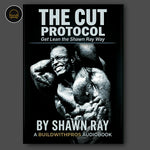
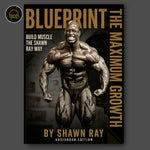
Old school bodybuilding has a reputation problem: respected for its discipline, dismissed as reckless on health. Both halves miss what the era actually proved. Shawn Ray competed professionally from 1987 to 2001 and walked off the Olympia stage at thirty-six intact: no shoulder surgery, no knee surgery, no back surgery. That is not luck. It is a method. This article covers the principles that made classic physiques last, what the era left unaddressed, and how the approach adjusts after 40.
"The joint you protect today is the joint that lets you train for the next thirty years."
From Fitness After 40: The Comeback Blueprint, by Shawn Ray
The four areas that decide the physique after 40, training, hormones, joints and sleep, are collected in one package, the Train For Life System.
What Old School Bodybuilding Actually Proved
Strip away the nostalgia and the classic era was defined by consistency across years: progressive work on fundamental movements, food-first nutrition measured in meals, and careers built season by season. Shawn Ray's run of 12 consecutive top-five finishes at the Mr. Olympia from 1990 to 2001 is what that looks like in results. Nobody sustains a decade at the top of the sport on shortcuts.
The era's blind spot was never the training. It was everything around the training. Sleep was assumed. Stress was ignored. Warm-ups were rushed. Overtraining had no name, because it had no visible injury. Some lifters got away with it. Many did not. The ones who lasted were the ones who, deliberately or by instinct, managed the recovery layer better than their rivals.
The discipline side of that era is not left as a footnote. In Shawn Ray's video master classes on discipline, mental toughness, and long-term career strategy, he shares how a career at the top is structured season by season rather than prep by prep, from the man who ran 12 consecutive top-five Olympia finishes.
Why This Article Exists
Most content treats the choice as binary: old school discipline or modern health-first training. The lifters asking better questions want both, and they are right to. The classic method is the foundation. The longevity layer is what makes it hold for decades. That combination is how the BuildWithPros education is structured, and the principles below are drawn from the titles that cover it: training after 40, injury-free training, rest and recovery, and sleep. The full method lives on the BuildWithPros education page.
The Four Principles That Make a Physique Last
1. The Structure Stays. The Dose Changes.
The workouts that build a physique at twenty-five are not the workouts that maintain it at forty-five. Lifters over 40 who pull up their old plans and go heavy on day one tend to end up sidelined within weeks: a torn pec, a strained rotator cuff, a back that will not cooperate. Not because they are weak, but because they are training the wrong way for the body they actually have.
The adjusted prescription is specific: moderate intensity, 8 to 15 reps, 60 to 90 seconds of rest, form over weight, and two to three sessions a week. The body over 40 responds well to resistance training, a conclusion two decades of research supports, but it responds to the right dose. The complete approach, including the 90-day comeback protocol for returning after a layoff, is covered in Fitness After 40: The Comeback Blueprint.
2. Joint Preservation Is a Job, Not an Afterthought
Most comebacks past 40 that fail are derailed by injury, and most of those injuries are preventable. Five injuries in particular end lifting careers: the torn pec, the torn bicep, the rotator cuff, the quadricep, and the lower back. They rarely arrive out of nowhere. Small technical mistakes become injuries, which is why the core rule is form before weight.
Joint preservation in practice means full-range, controlled reps, warming the engine before loading it, and learning the difference between good pain and bad pain before a warning sign becomes an injury. Ego is the force that overrides every one of those principles in a second, which is why it gets its own chapter in The Injury-Free Training Blueprint.
3. Recovery Is Trained, Not Assumed
Rest and recovery decide whether hard training turns into growth or just accumulated fatigue. Overtraining is the injury without a sharp pain to announce it, and its early warnings are measurable: lethargy, no pump, stalled weights, and a rising resting heart rate. A lifter who tracks those signals can back off a week before the body forces a month.
Recovery also has a structure: sleep and its link to growth hormone, stress and cortisol outside the gym, post-workout nutrition, and rest days adjusted to age, training level, and recovery signals rather than a fixed template. How Shawn Ray thinks about that structure is covered in Bodybuilding Rest and Recovery.
4. Sleep Is the Chain That Holds It Together
At twenty-five, five hours of sleep and a hard session the next day is survivable. At forty-five, the same five hours works against everything a lifter is building: recovery, hormones, body composition, and decision-making all degrade together. Sleep is not the soft part of the program. After 40, it is the part the rest of the program depends on.
It is also trainable. The 3am wake-up that plagues men over 40 has a fixable biological cause, and the practical fixes, a bedroom audit, a wind-down protocol, and an honest look at which sleep supplements do anything, are covered in The Sleep Reset for Men Over 40.
Old School Assumptions vs. What the Method Actually Says
| The old school assumption | What the method actually says |
|---|---|
| Train at 45 like you trained at 25 | Same structure, adjusted dose: moderate intensity, 8 to 15 reps, form over weight |
| No pain, no gain | Good pain and bad pain are different signals, and knowing which is which prevents the injury |
| Rest is for the unmotivated | Overtraining is an invisible injury with measurable early warnings |
| Sleep is negotiable | Sleep drives recovery and hormones, and after 40 the program depends on it |
| Push through whatever hurts | Training around a limitation keeps you moving; training through it ends the season |
Swipe sideways on mobile to see the full table
The Three Mistakes That End Comebacks
The first mistake is starting where you left off. The lifter who pulls up his old plan and goes heavy on day one is usually sidelined within six to eight weeks. The comeback that lasts starts with the adjusted dose and builds from there.
The second mistake is ignoring the invisible injury. Lethargy, no pump, stalled weights, a rising resting heart rate: the lifter who dismisses those signals as a bad week is accumulating the injury that has no sharp pain. The fix costs a few easy days. Ignoring it costs months.
The third mistake is treating joint work as optional. Full-range controlled reps, real warm-ups, and form before weight feel like they slow progress down. They are what make progress survivable. Most failed comebacks past 40 die on an injury that was preventable.
What This Article Did Not Cover
This article covered the principles. It did not cover:
- The five training rules in full, with the complete session structure for training after 40
- The four-meal protein system that replaces six meals a day
- The five career-ending injuries and how each one is prevented
- The bedroom audit, the wind-down protocol, and the honest tier list of sleep supplements
- The 90-day comeback protocol for returning after a layoff
Those live inside the Train For Life System: one system for the four things that decide the physique after 40, training, hormones, joints, and sleep, instead of four separate purchases.
Get the full system → Train For Life System: Built to Last After 40
Educational training and nutrition content. Not medical advice. Consult a qualified physician before starting a new training or nutrition program.
Train with Shawn Ray in person
Shawn Ray left the Olympia stage at thirty-six with his joints intact, and the method behind that is something he now works through with guests in the gym. Training with Shawn Ray Day is a one on one day in Newport Beach or Venice Beach, California: a workout on the body part you choose, a Q&A on training, recovery and the business of bodybuilding, photos and lunch. It is open to men and women aged 18 and older at any level, requested through a form on BuildWithPros.com, and Shawn confirms the date directly.
Frequently Asked Questions
Is old school bodybuilding still effective today?
The principles hold up: progressive work on the fundamental movements, food-first nutrition, and consistency across years. What the classic era treated as afterthoughts, sleep, stress, joint preservation, and overtraining, is where the method has been deliberately expanded. The training that builds the physique has not changed as much as the layer that protects it.
How do pro bodybuilders adjust training as they age?
The structure stays, the dose changes. In Shawn Ray's approach for training after 40, that means moderate intensity, 8 to 15 reps, 60 to 90 seconds of rest, form over weight, and two to three sessions a week. The workouts that built a physique at twenty-five are not the workouts that maintain it at forty-five.
Can you build muscle after 40?
Yes. The body over 40 responds well to structured resistance training, a conclusion supported by two decades of research including the National Strength and Conditioning Association's position statement on resistance training for older adults. What changes is recovery capacity, which is why training, nutrition, recovery, and mindset all have to be adjusted together.
How is joint health protected in serious bodybuilding?
The core rule is form before weight: small technical mistakes are what become injuries. Joint preservation means full-range, controlled reps, warming up before loading, and knowing the difference between soreness and injury pain before a warning sign becomes an injury. The joint protected today is the joint that allows decades of training.
What are the early warning signs of overtraining?
Lethargy, no pump, stalled weights, and a rising resting heart rate. Overtraining is an injury without a sharp pain to announce it, which is why it derails lifters who would never ignore a torn muscle. Recovery, sleep, and stress management are what keep hard training turning into growth instead of accumulated fatigue.
Where can I learn a complete method built for career length?
The BuildWithPros education covers training, nutrition, recovery, mindset, and competing in five tracks that run in the order Shawn Ray recommends. For lifters over 40 specifically, the Train For Life System combines the four areas that decide the physique after 40: training, hormones, joints, and sleep. The mental side of career length, mental resilience, motivation across decades, and training after 40, is covered in the mindset and resilience audiobooks based on Shawn Ray's experience, all narrated by a professionally produced AI voice.
About the source
This article is published by BuildWithPros and draws on Fitness After 40: The Comeback Blueprint, The Injury-Free Training Blueprint and The Sleep Reset from the BuildWithPros catalog, and on the competitive experience of IFBB Hall of Famer Shawn Ray: 13-time Mr. Olympia competitor with 12 consecutive top-five finishes from 1990 to 2001, Mr. Olympia runner-up in 1994 and 1996, and 1991 Arnold Classic champion, across a career spanning nearly two decades. He remains active in the sport as master of ceremonies for IFBB and NPC events, as a bodybuilding contest promoter and host of the Shawn Ray Pro Am Hawaiian Classic, the annual NPC and IFBB Pro League sanctioned championship in Honolulu, and as a consultant to the Mr. Olympia. It follows the standard applied across the catalog: every method explained, nothing left to guesswork.
Educational content only, not medical advice.
This article is published by BuildWithPros for general educational and informational purposes. It is not medical advice and not a substitute for care from your doctor, physical therapist, or other licensed healthcare professional. Consult a qualified healthcare professional before starting any new training or nutrition program, particularly if you have a medical condition, take prescription medications, are recovering from surgery or injury, or have any concerns about safety.
Any exercise or dietary change carries inherent risks. Individual results vary. Nothing in this article guarantees progress, muscle growth, injury prevention, or specific outcomes. BuildWithPros and its contributors are not liable for any loss, injury, or damages resulting from the use or misuse of the information in this article.